Featured

Meal Prep the Safe Way for the Best Day!

After a good dinner one can forgive anybody, even one’s own relations.

— Oscar Wilde.
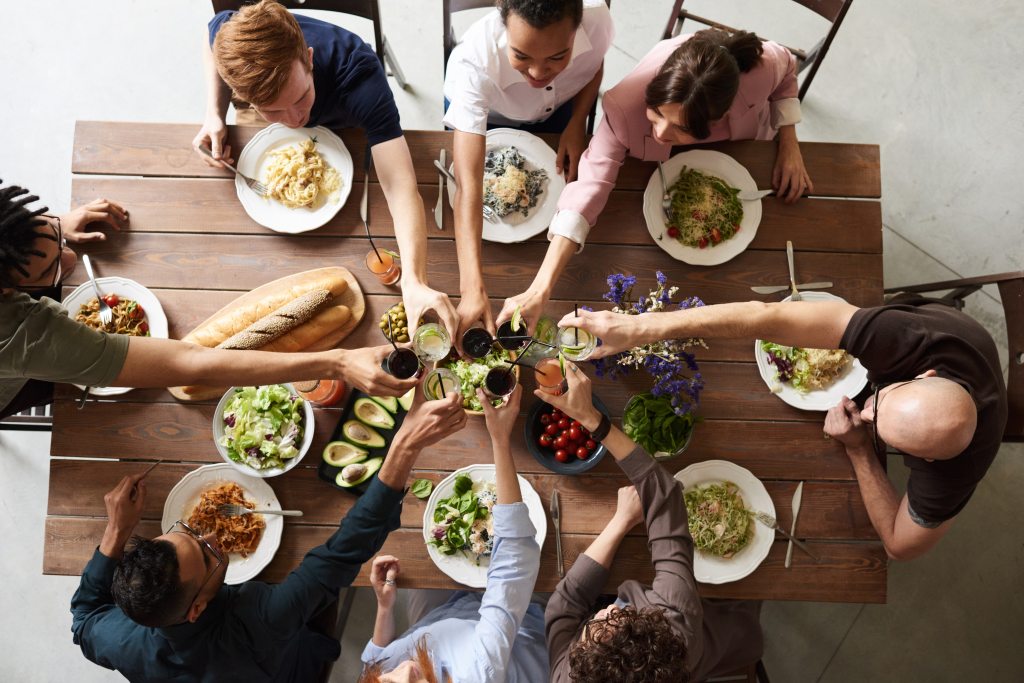
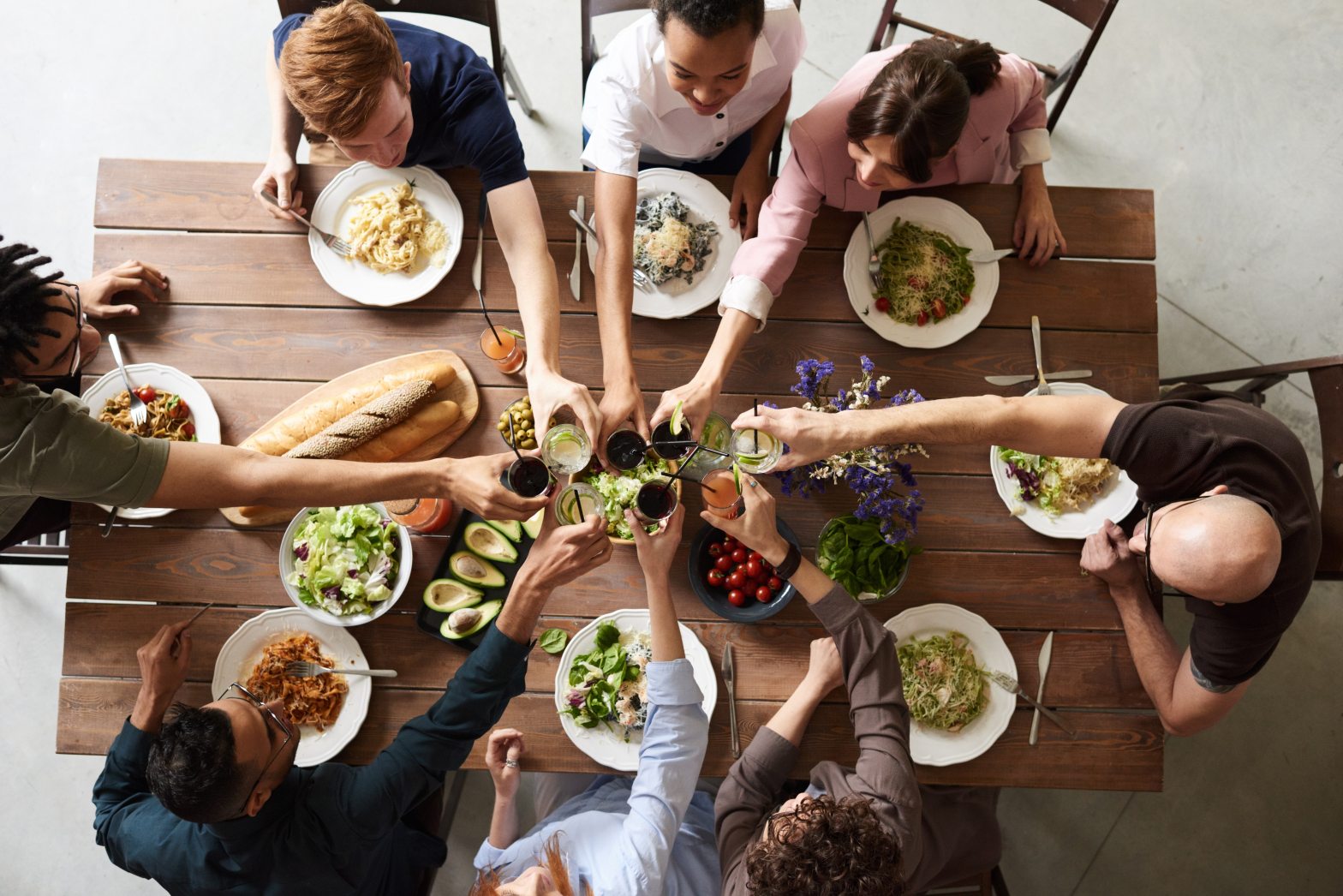
There is seemingly nothing more memorable than family sitting around the table sharing a meal together.  Each family brings treasured homemade dishes to share.   Extended family enjoy a meal and visit all afternoon while children play together outside in the yard.  The only thing more memorable is the same family a few hours later sitting in the ER with food poisoning. 

This happened to my husband’s family one Thanksgiving when the chicken wasn’t cooked properly in the dressing.  The matriarch of the family was well known for her chicken and dressing.  There were usually no leftovers because everyone waited all year to enjoy it and ate several helpings at lunch.  That particular year, the chicken had been boiled earlier in the morning to make stock and cook the chicken for the dressing.  The problem was that the chicken and stock weren’t boiled long enough, nor was it cooked enough in the dressing.  Later in the afternoon, when family should be visiting and children playing, lots of people began throwing up and having other stomach symptoms.  Multiple people got so sick they had to go to the Emergency Room.  Thankfully no one died.  We still talk about that Thanksgiving meal.  It was memorable, to say in the least.

Food poisoning is described as nausea, vomiting and diarrhea related to ingesting bacteria, viruses or parasites.  One of the most common viral associated food poisoning is Norovirus, highlighted by national newscasters reporting on stories of entire cruise ships full of passengers getting sick while on a trip.  Two common bacterial associated food poisonings are from E. coli and Salmonella.  People with weakened immune systems, pregnant women, young children and older adults are more likely to get sick from them. (UpToDate, 2019)

The CDC reports 48 million people get food poisoning every year.  Of those, 128,000 will end up in the ER and 3,00 will die. (CDC, 2018)  Your family’s luncheon should be remembered for how delicious it was, not how badly it made everyone sick.  Family feasts are stressful enough without adding medical drama to the meal.  You can prevent foodborne illness by being mindful of pre-cooking problems, mid-cooking concerns and post-cooking issues.

Pre-cooking Problems can arise from contamination or cross contamination of raw meat or poultry, raw seafood or shellfish, fresh fruits, veggies and sprouts, raw eggs, unpasteurized milk and related products and raw flour.(CDC, 2019)  Food handlers can carry bacteria on their hands and can contaminate raw food. Raw ingredients themselves can carry bacteria. The CDC announced in April 2019 that raw meat or poultry should NOT be washed before cooking as it causes an increase in bacteria spread over ingredients, utensils and kitchen surfaces.  Fresh fruits, veggies and sprouts SHOULD be washed to reduce the possibility of bacterial contamination.  Raw meat, shellfish, seafood, eggs and flour must be cooked to a safe internal temperature to avoid food poisoning.  Unpasteurized milk or milk products should not be consumed.

Open Stock Photo from Pexels.com

Food handler related pre-cooking problems can be resolved by washing our hands with soap and water before we begin to handle any food, throughout the cooking process and before we sit down to eat.  The CDC recommends soap and water be used and hands scrubbed for 20 seconds before rinsing. (CDC-Handwashing, 2019)  The “Happy Birthday” song could be hummed twice, or the Alphabet song could be sung once to keep track of the 20 seconds washing time.  (It could also make handwashing fun for children.)  In my family I go a step further by wearing disposable gloves and changing them when necessary.  I began doing that when my children were little because they usually had their biggest fights, or my doorbell or phone rang about the time I started pattying out hamburgers or making meatloaf.  I have found the additional step of putting on (and changing gloves) when preparing food saves much time, aggravation and bacterial contamination.  Be sure to wash your hands afterward you remove your gloves as well.

Side Note:  As a home baker, mom and medical student I knew why most items caused bacteria associated food poisoning.  However, I had never fully understood why labels state “NEVER eat raw cookie dough!” until I read the CDC information on raw flour.  They say raw flour is not treated, and as such can contain bacteria that cause food poisoning if eaten raw.  These bacteria can come from any step in processing from the field to the factory to packaging.  Cooking or baking kills those bacteria.  When we add the possibility of ingesting bacteria from raw eggs and bacteria from raw flour, we can get a double helping of disaster when we eat raw cookie dough or cake batter!

Cooking Concerns are reduced by cooking food to a safe internal temperature to kill any bacteria.  This can be worrisome especially during the holidays, when turkeys are thawed, cooked or fried.  Meat should be thawed in the refrigerator for a couple of days or in cold water that is changed every 30 minutes.  Thermometers should be inserted into the thickest portion of meat, but not touching bone, to get an accurate reading.  Guidelines also suggest taking temperatures in at least 3 locations to be certain meat is thoroughly cooked.  Ham, pork and red meat should be cooked to an internal temperature of 145 degrees and poultry to 165 degrees. (Foodsafety.gov, 2019)  Eggs should be cooked until the yolk and whites are firm.

Post-cooking Issues begin when food is left out at room temperature too long.  The CDC recommends all cooked food should be refrigerated to 40 degrees or below within 2 hours of cooking, or within 1 hour if the room temperature is above 90 degrees. (CDC, 2019)  Whole turkeys, hams or chickens should be cut off the bone into thinner sections to cool more quickly in the refrigerator.  Food should not be left out to cool until it reaches room temperature before being refrigerated.  The USDA recommends leftovers be stored in shallow containers and be refrigerated for no more than 3-4 days or frozen 3-4 months before discarding. (FSIS, 2019)  Only reheat the leftovers you are going to eat for that meal and be sure to put leftovers back into the fridge immediately after use.

If you put these recommendations into practice, all your meals should be safe from foodborne pathogens and your guests free from food poisoning related family get-together memories.  Everyone will be hugging each other as they leave, and not garbage cans.

References:

Patient education:  Food poisoning (The Basics).  UpToDate.  Accessed Nov 30, 2019.

Estimates of Foodborne Illness in the United States. (2018, November 5). Retrieved from https://www.cdc.gov/foodborneburden/index.html.

Centers for Disease Control and Prevention. (2019, October 11). Foods Most Likely to Cause Food Poisoning. Retrieved November 30, 2019, from https://www.cdc.gov/foodsafety/foods-linked-illness.html.

Public Affairs. (2019, November 21). Meat and Poultry Charts. Retrieved from https://www.foodsafety.gov/food-safety-charts/meat-poultry-charts.

FSIS. (n.d.). Retrieved from https://www.fsis.usda.gov/wps/portal/fsis/topics/food-safety-education/get-answers/food-safety-fact-sheets/safe-food-handling/leftovers-and-food-safety/ct_index.

Handwashing: A Healthy Habit in the Kitchen. (2019, October 3). Retrieved from https://www.cdc.gov/handwashing/handwashing-kitchen.html.

Open Source Photos courtesy of Pexels.com. (n.d.). Retrieved from http://www.Pexels.com/.
Hospice and Palliative Care Reflections from my rotation:

I recently spent a month rotating with different staff members of a hospice organization during my Hospice rotation. I learned so many things from my preceptor, staff, patients and their families. I would love to share with you the essay I wrote about it.

There were many concepts that hit home with me during my time in Hospice and Palliative Care.  The variety of lifestyles and homes these patients lived in struck me.  Their support structures also impacted me.  Observing each hospice team member interact with and serve their patients was deeply moving.  I also greatly appreciated learning how the field of medicine was able to help ease each patient’s suffering and symptoms so they could live well and prepare to die well.  I found that hospice groups offer more services to the community than just hospice and palliative care.  And, I learned that hospice and palliative care can greatly benefit my patients when curative measures don’t.

One of my first home hospice visits was to a 100 year old patient who lived in an actual mansion.  Her surroundings were some of the finest I’ve ever seen.  Despite her palatial home and family’s great financial influence, she was dying.  With all the resources at her family’s disposal, money bought beautiful bed linens and excellent caregivers.  But money could not buy her more time.   I realize money can make people more comfortable, but death comes for us all sooner or later.

That same day I walked into one of the worst living situations I’ve ever witnessed.  The yard looked more like a junkyard, littered with vehicles and piled with trash.  Inside the home was no less of a disaster.  The occupants appeared to be hoarders.  There were piles of stuff in every nook and cranny.  The smell was equally horrible.  Walking through to the back of the house I heard the patient and his oxygen concentrator along with a portable air conditioner and made my way to them behind the hospice nurse.  This patient living in squalor had lost his sight and both legs but not his sense of humor.  He was lying in a stale, putrid, urine soaked diaper and bed pad but smiled and joked during the whole visit.  I realize a person’s attitude towards the situation they’re in is the most important possession a person has.

I observed the hospice nurse walk into the palace and care for the wealthy patient.  I also saw her walk into the hoarded, filthy home and care for the reeking patient.  Her eyes sparked with joy in both situations.  Her face beamed with love for them both.  Her hands expertly cared for each patient’s needs.  She spoke with them with a voice filled with compassion and caring.  I was reminded that whether patients are royalty or reeking they all deserve to be shown the same dignity and respect.

I was impacted by the fact that both the patient in the palace and the one in the “pig sty” had a loving support system around them.  They both had caregivers who tried their best to see to the needs of their dying loved one.  These patients and their families also had the entire hospice team supporting them as they prepared for their loved one’s departure.  I mentally contrasted them with another in-patient who was removed from his home due to unsanitary conditions and was estranged from his entire family.  He lay in his hospital room and bed with no home, no family support system and no future.  But he had loving hospice workers who cared.

I was cognizant of the role that four legged family members played in patient support.  At most of the homes we visited there were fiercely loyal furry friends standing by their masters to protect and comfort.  Every hospice team member was quick to acknowledge and love on each patient’s pet.  This was yet another way they showed respect to their patients and families.  In retrospect, I believe pets know something’s wrong with their human.  They worry and grieve.  They need care and support too.  By cherishing each patient’s pet, we are ministering to the pet, the patient and the whole family.

I appreciated learning different ways to use common medications.  I didn’t know that scopolamine was used for more than motion sickness.  I learned its anticholinergic properties are used off label to dry up secretions when a patient had copious secretions or dysphagia.  I found out atropine ophthalmic drops are also used sub-lingual to do the same thing.  I learned that morphine can be nebulized to palliate patient symptoms of air hunger by temporarily depressing chemoreceptors in the throat.  Lasix could be nebulized to decrease pulmonary edema.  I even saw an ornery patient who refused oral meds rub an Ativan “lotion” onto their skin and receive calming results several times per day.

I did not know that hospice offices do many other things in the community.  My Hospice location provided a monthly Alzheimer’s Support Group, bimonthly Veterans’ Support Group and monthly Grief Group.  They offered Bereavement support to families for a year after the patient has died.  They hosted Trick-or-Treat for community children.  The whole staff attended the Veteran’s Day parade and ceremony and they even gave out US Flags.  They supported the whole community, not just the patients who were terminal.

I was caught off guard by a particular patient/staff member interaction.  I had seen this patient in the hospital several times.  I had even described him as unintelligible and obtunded.  However, when the Social Worker entered the room, his entire face lit up and a broad smile crossed his lips.  Then I watched him talk with her in their own form of communication.  He was able to make his likes and wishes known.  He even shared with her he didn’t like to eat eggplant when she asked him about his favorite meals and things he did not want to eat. 

It occurred to me this day that different staff members have different relationships with patients.  As a medical student, I was there to assess his body medically.  As a social worker, that hospice staff member was there to assess his needs socially.  She connected with him on an entirely different level.  The patient she saw and the one I saw seemed like two entirely different patients.  I will be certain to seek input from multiple disciplines’ team members about patients in the future because they see different facets of each patient.

I was amazed by each hospice team member and the size of their hearts.  They poured immense love and care on each patient and their family.  They gave their whole being in service to their patients.  They completely exhausted themselves.  Their hearts broke when their patients passed on.  They grieved the loss of their patients along with the patient’s family, because they BECAME family members.  They cried, then rested, then returned to receive a new patient and begin the process again.  I have great respect for each of these hospice team members for the level of dedication they exhibited daily to their patients and families. 

In summary, I am immensely grateful for all that my hospice staff members, patients and their families had to teach me.  I heard it erroneously said that hospice hastens a patient’s death by severely sedating them or overdosing them on morphine.  That could not be further from the truth.  I learned that hospice is so much more important than I ever knew.  I’m more prepared to discuss hospice care with my future patients when my efforts at curative care are failing.  I have seen firsthand many features of hospice care and how patients and their families can benefit from the expert loving care hospice personnel provides.  I know better how to tell my patients all hospice has to offer them.  Referring my patients to hospice does not mean I have failed to cure them as a physician.  It means I have succeeded in referring them to a compassionate group of hospice team members who will help them, and their loved ones make the most of the time they have left.  And when their time dwindles, Hospice staff will compassionately walk beside each patient and family as they transcend this life into the next.

Hello. Thank you for visiting! Could I introduce myself…

My name is Patricia Hughes and I am a 3rd year Osteopathic Medical Student.

I am a “non-traditional” medical student, meaning I took the opportunity to go to medical school later in life. I’m also a wife, mother, daughter, sister and friend.

I attend Alabama College of Osteopathic Medicine in Dothan, Alabama.

  • My Hospice and Palliative Care Preceptor, Dr. Joanne Smith, suggested I write a blog as part of my CV. I’m taking her advice!
  • I want to gain practice while presenting relevant medical information about sometimes overlooked aspects of our daily lives.
  • I hope you leave my blog armed with easily do-able ways to make healthier choices. After all, if we choose well, we can D.O. life well.

Design a site like this with WordPress.com
Get started