After a good dinner one can forgive anybody, even one’s own relations.
— Oscar Wilde.
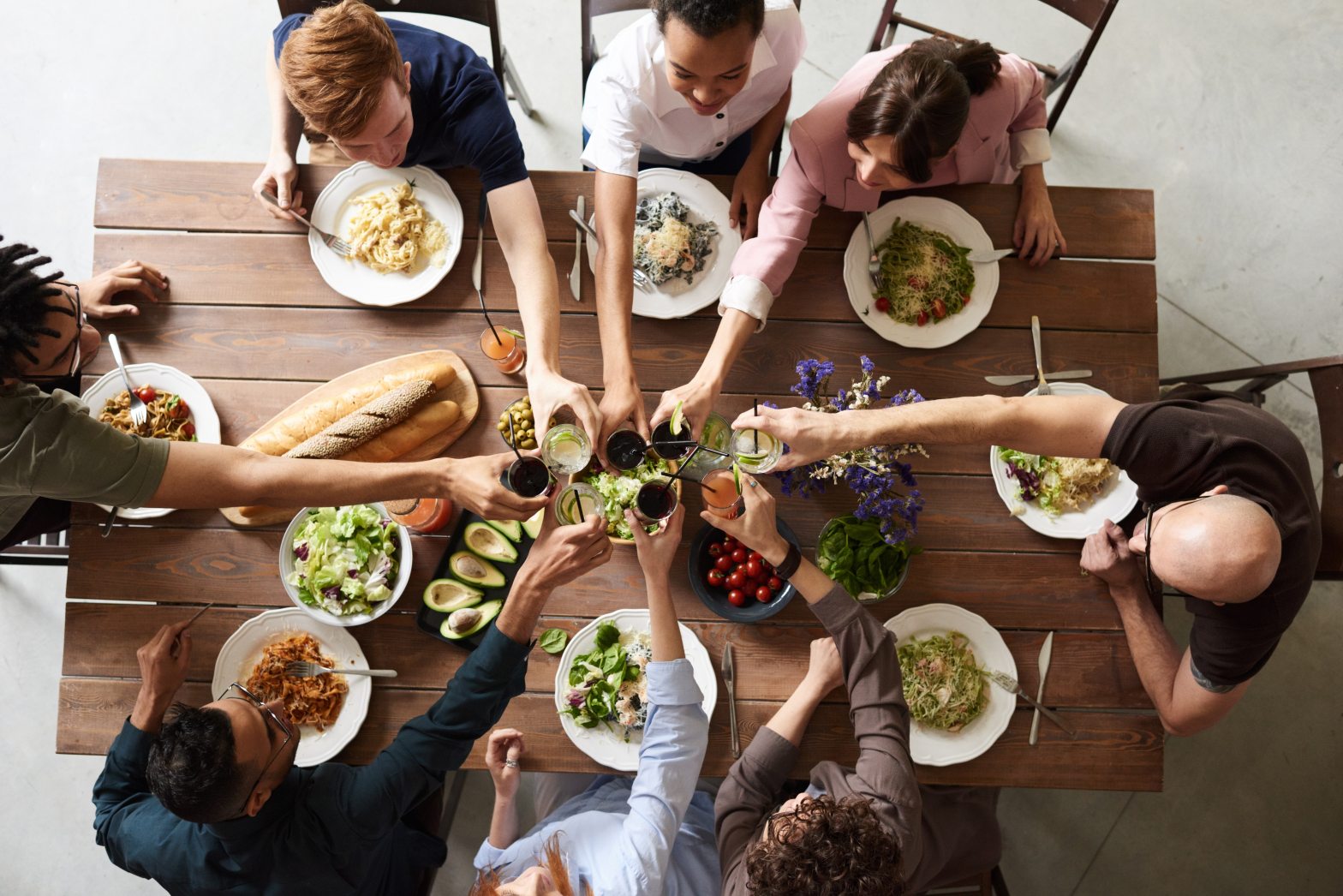
There is seemingly nothing more memorable than family sitting around the table sharing a meal together. Each family brings treasured homemade dishes to share. Extended family enjoy a meal and visit all afternoon while children play together outside in the yard. The only thing more memorable is the same family a few hours later sitting in the ER with food poisoning.
This happened to my husband’s family one Thanksgiving when the chicken wasn’t cooked properly in the dressing. The matriarch of the family was well known for her chicken and dressing. There were usually no leftovers because everyone waited all year to enjoy it and ate several helpings at lunch. That particular year, the chicken had been boiled earlier in the morning to make stock and cook the chicken for the dressing. The problem was that the chicken and stock weren’t boiled long enough, nor was it cooked enough in the dressing. Later in the afternoon, when family should be visiting and children playing, lots of people began throwing up and having other stomach symptoms. Multiple people got so sick they had to go to the Emergency Room. Thankfully no one died. We still talk about that Thanksgiving meal. It was memorable, to say in the least.
Food poisoning is described as nausea, vomiting and diarrhea related to ingesting bacteria, viruses or parasites. One of the most common viral associated food poisoning is Norovirus, highlighted by national newscasters reporting on stories of entire cruise ships full of passengers getting sick while on a trip. Two common bacterial associated food poisonings are from E. coli and Salmonella. People with weakened immune systems, pregnant women, young children and older adults are more likely to get sick from them. (UpToDate, 2019)
The CDC reports 48 million people get food poisoning every year. Of those, 128,000 will end up in the ER and 3,00 will die. (CDC, 2018) Your family’s luncheon should be remembered for how delicious it was, not how badly it made everyone sick. Family feasts are stressful enough without adding medical drama to the meal. You can prevent foodborne illness by being mindful of pre-cooking problems, mid-cooking concerns and post-cooking issues.
Pre-cooking Problems can arise from contamination or cross contamination of raw meat or poultry, raw seafood or shellfish, fresh fruits, veggies and sprouts, raw eggs, unpasteurized milk and related products and raw flour.(CDC, 2019) Food handlers can carry bacteria on their hands and can contaminate raw food. Raw ingredients themselves can carry bacteria. The CDC announced in April 2019 that raw meat or poultry should NOT be washed before cooking as it causes an increase in bacteria spread over ingredients, utensils and kitchen surfaces. Fresh fruits, veggies and sprouts SHOULD be washed to reduce the possibility of bacterial contamination. Raw meat, shellfish, seafood, eggs and flour must be cooked to a safe internal temperature to avoid food poisoning. Unpasteurized milk or milk products should not be consumed.

Food handler related pre-cooking problems can be resolved by washing our hands with soap and water before we begin to handle any food, throughout the cooking process and before we sit down to eat. The CDC recommends soap and water be used and hands scrubbed for 20 seconds before rinsing. (CDC-Handwashing, 2019) The “Happy Birthday” song could be hummed twice, or the Alphabet song could be sung once to keep track of the 20 seconds washing time. (It could also make handwashing fun for children.) In my family I go a step further by wearing disposable gloves and changing them when necessary. I began doing that when my children were little because they usually had their biggest fights, or my doorbell or phone rang about the time I started pattying out hamburgers or making meatloaf. I have found the additional step of putting on (and changing gloves) when preparing food saves much time, aggravation and bacterial contamination. Be sure to wash your hands afterward you remove your gloves as well.
Side Note: As a home baker, mom and medical student I knew why most items caused bacteria associated food poisoning. However, I had never fully understood why labels state “NEVER eat raw cookie dough!” until I read the CDC information on raw flour. They say raw flour is not treated, and as such can contain bacteria that cause food poisoning if eaten raw. These bacteria can come from any step in processing from the field to the factory to packaging. Cooking or baking kills those bacteria. When we add the possibility of ingesting bacteria from raw eggs and bacteria from raw flour, we can get a double helping of disaster when we eat raw cookie dough or cake batter!
Cooking Concerns are reduced by cooking food to a safe internal temperature to kill any bacteria. This can be worrisome especially during the holidays, when turkeys are thawed, cooked or fried. Meat should be thawed in the refrigerator for a couple of days or in cold water that is changed every 30 minutes. Thermometers should be inserted into the thickest portion of meat, but not touching bone, to get an accurate reading. Guidelines also suggest taking temperatures in at least 3 locations to be certain meat is thoroughly cooked. Ham, pork and red meat should be cooked to an internal temperature of 145 degrees and poultry to 165 degrees. (Foodsafety.gov, 2019) Eggs should be cooked until the yolk and whites are firm.

Post-cooking Issues begin when food is left out at room temperature too long. The CDC recommends all cooked food should be refrigerated to 40 degrees or below within 2 hours of cooking, or within 1 hour if the room temperature is above 90 degrees. (CDC, 2019) Whole turkeys, hams or chickens should be cut off the bone into thinner sections to cool more quickly in the refrigerator. Food should not be left out to cool until it reaches room temperature before being refrigerated. The USDA recommends leftovers be stored in shallow containers and be refrigerated for no more than 3-4 days or frozen 3-4 months before discarding. (FSIS, 2019) Only reheat the leftovers you are going to eat for that meal and be sure to put leftovers back into the fridge immediately after use.
If you put these recommendations into practice, all your meals should be safe from foodborne pathogens and your guests free from food poisoning related family get-together memories. Everyone will be hugging each other as they leave, and not garbage cans.
References:
Patient education: Food poisoning (The Basics). UpToDate. Accessed Nov 30, 2019.
Estimates of Foodborne Illness in the United States. (2018, November 5). Retrieved from https://www.cdc.gov/foodborneburden/index.html.
Centers for Disease Control and Prevention. (2019, October 11). Foods Most Likely to Cause Food Poisoning. Retrieved November 30, 2019, from https://www.cdc.gov/foodsafety/foods-linked-illness.html.
Public Affairs. (2019, November 21). Meat and Poultry Charts. Retrieved from https://www.foodsafety.gov/food-safety-charts/meat-poultry-charts.
FSIS. (n.d.). Retrieved from https://www.fsis.usda.gov/wps/portal/fsis/topics/food-safety-education/get-answers/food-safety-fact-sheets/safe-food-handling/leftovers-and-food-safety/ct_index.
Handwashing: A Healthy Habit in the Kitchen. (2019, October 3). Retrieved from https://www.cdc.gov/handwashing/handwashing-kitchen.html.
Open Source Photos courtesy of Pexels.com. (n.d.). Retrieved from http://www.Pexels.com/.
 D.O. Life Well